Tuesday, May 10, 2016

Airbag Lab
The lab was inflating a Ziploc bag with carbon dioxide from the chemical reaction of vinegar and baking soda. It was a bit stressful as I had to rely on my own accuracy of my procedure and measurments. Sadly, my measurements were off and my bag did not fully inflate.
 |
| http://www.moneysavingexpert.com/news/phones/2015/05/that-smile-might-cost-you-beware-being-hit-with-huge-emoji-fees |
Quiz Reflection
We took a quiz on gas laws. The quiz was not that bad at all, and I hope I score well. The lectures we've learned so far were not too hard and only consisted of formulas. I am looking forward to our next lessons.
 |
| https://blog.earlyshares.com/university/reg-a-meet-the-newest-way-to-do-real-estate-crowdfunding/ |
PV=nRT
We had another lecture for the gas laws unit. This was yet another formula lecture, one that was not difficult at all and mostly involved basic plug-n-chug. I am really nervous for the lab on Monday as it is pass-fail, and I don't 100% trust myself with being accurate in my calculations.
 |
| http://www.calctool.org/CALC/chem/c_thermo/ideal_gas |
Lectures
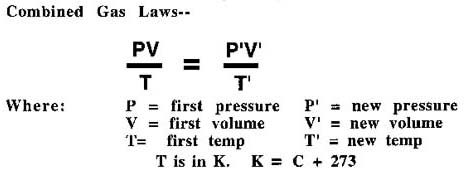
The gas laws unit has proven to be pretty straightforward and simple. The first lectures we've had are centered on one major formula: the combined gas law formula. We've gone through various different problems concerning the gas law, only with different constants. Additionally, we've learned different units of pressure, which I believe is the only difficult part of this unit: memorizing all the different conversions and units.
 |
| https://prezi.com/8ywewmiga8tq/combined-gas-law/ |
Energy Test Reflection
We took our unit test for Energy. This whole unit flew by as there were only two lectures and one lab, and everything was pretty straightforward. Thus, I felt like the test was pretty simple and nothing to stress over this weekend.
 |
| https://commons.wikimedia.org/wiki/File:Phase_changes.svg |
Specific Heat of a Metal Lab
We did a lab to measure the specific heats of copper and lead by heating the metals in a hot water bath and figuring out the variables for MCAT. I'm pretty happy because our copper trial yielded only a 4% error for the specific heat!


Boat Racing
Last week, we conducted our boat races. I'm proud to say that my partner and I won third place. It was a really fun experience, and it definitely was a relief from the usual lecture/test stress.

Making Biodiesel Part 2
On Friday, we found our biodiesel separated into three layers! The top and bottom layers were impurities, and our actual biodiesel was the middle layer. To test if our biodiesel worked, we filled an empty tea light wick with the biodiesel and lit it. Sure enough, the flame was sustained for quite a bit, indicating that our biodiesel worked great!


Making Biodiesel Part 1
On Thursday, we began the process of making our own biodiesel. First, we took recycled peanut oil and combined it with a mixture of KOH and methanol. Then, we put a flask of this mixture into a hot water bath and boiled it for about 20 minutes. Lastly, we let it cool and settle, upon which it began to separate into two layers.



Unit Test Reflection
We took the unit test yesterday, and I thought it went pretty well! Much of the test came from the practice quizzes on Schoology which I used to review. I used some of those resources on Schoology. At first, I was a bit apprehensive about this unit as there were so many things to remember. and I felt really nervous about this test. However, with lots of practice, I felt really comfortable with the concepts.
 |
| http://1fotonin.com/group/pictures-of-happy-faces/index.htm |
Modeling Activity
Last week, we went to the library for a lab. It was interesting as it was in the library where we drew on the tables and played around with building pieces to create Lewis structures. I enjoyed this lab as it allowed me to practice Lewis strucutres, something I am still quite uneasy about. It was also great to have Mrs. Frankenberg hovering around, available to answer any questions.
 |
| http://faculty.sdmiramar.edu/fgarces/zCourse/All_Year/Ch100_OL/aMy_FileLec/04OL_LecNotes_Ch100/05_CompoundBonding/502_Lewis/502_Lewis.htm |
Lecture
 |
| http://www.slideshare.net/Drahmadfahmi/04-chemical-bonds |
Thursday, March 10, 2016
Unit Test
Friday's test went pretty well, I do say. It may have been a little more difficult than the quiz as I was a bit uneasy on a couple questions. Some questions asked about acidity and alkalinity, which I didn't really know how to answer, so I guessed on those. This test was much easier than past tests and I feel rather well about this one.
Periodic Trends Lecture
The final installment of the electronic structure unit is periodic trends. The periodic table follows a couple of trends that can provide details about various atoms (only S and P block atoms though). The different trends were a bit hard to differentiate and remember what each one specifies, but I think with some more studying, they will be easily remembered. I'm feeling pretty good about the test on Friday, but I still definitely need to look over this lecture, which I believe may be the hardest lesson of the unit (but still not that difficult).
 |
| https://en.wikipedia.org/wiki/Periodic_trends |
Helpful link:https://www.youtube.com/watch?v=XK-WTYncldA
Weekly Quiz
We took this unit's weekly quiz. Much of the quiz came directly from the online practice which I use to study. It wasn't as difficult as some of the other units.
Here are some links for future studying:
Spectroscopic Analysis Lab
We performed yet another lab. This lab was not nearly as exciting as the flame test lab. For this lab, we adjusted various knobs on a spectrophotometer and found the amount of light in blue and pink solutions. It was really difficult to adjust the knob so that the number read exactly what it was supposed to. This was extremely time-consuming as we had to re-adjust the knobs for every single different wavelength. Additionally, it was dull as all the lab consisted of was a) adjust the knobs and b) record the number.
Lecture on Electronic Structure
We've started a new unit, and it has been going pretty well. At first, the unit seemed a bit confusing, but it all began to make sense gradually. The first lesson of the unit was on wavelengths of light. We learned the formula for the speed of light (C= frequency x wavelength) and for energy (E= Planck's constant x frequency). These two formulas were easy to understand as problems associated with the lesson are pretty basic plug-and-chug. Yesterday, we learned about the electron configuration of elements. This lesson was chockful of vocab and steps to memorize. It was definitely a bit confusing and time-consuming at first to figure out each element's different electron structure and diagram and to memorize all the little rules for different types of elements. However, I soon began to understand it, and I even think it's a bit fun (Something I have NEVER said about chemistry, so that's saying a lot!).
Some links for review on these lessons:
http://chemed.chem.purdue.edu/genchem/topicreview/bp/ch6/electronconfigpractice.html
http://www.sciencegeek.net/Chemistry/taters/Unit2ElectronNotations.htm
https://www.youtube.com/watch?v=2AFPfg0Como
 |
| http://chemwiki.ucdavis.edu/Core/Inorganic_Chemistry/Electronic_Structure_of_Atoms_and_Molecules/Electronic_Configurations |
http://chemed.chem.purdue.edu/genchem/topicreview/bp/ch6/electronconfigpractice.html
http://www.sciencegeek.net/Chemistry/taters/Unit2ElectronNotations.htm
https://www.youtube.com/watch?v=2AFPfg0Como
Flame Lab
Today in class we had another lab, one which may be my favorite lab we've done all year: the Flame Test Lab. Basically, we placed several different chemical compounds and solutions in the flame of a Bunsen burner to see the various colors each one produced. It was really awesome to see the vivid colors that varied among each metal. The smell was really reminiscent of summer (fireworks, bonfire, you get the picture) when we first walked in due to the Bunsen burners.

Subscribe to:
Posts (Atom)